Microlearning is a way of learning in short, focused sessions — usually 5 to 15 minutes — that each cover one small, specific idea or skill. Instead of studying for hours at a stretch, you learn in bite-sized pieces that fit around a busy schedule. Done consistently, these small sessions add up to real, lasting knowledge.
If you have ever told yourself you will “sit down and study properly this weekend” and then never quite found the three-hour block, you already understand the problem microlearning solves. Life is full. Long, uninterrupted study time is rare. But small pockets of time — a coffee break, a commute, the ten minutes before dinner — are everywhere.
This guide explains what microlearning is, why short sessions often beat long ones, and exactly how to build a microlearning routine that actually sticks. You will also learn where the approach falls short, so you can use it well instead of blindly.
What Is Microlearning?
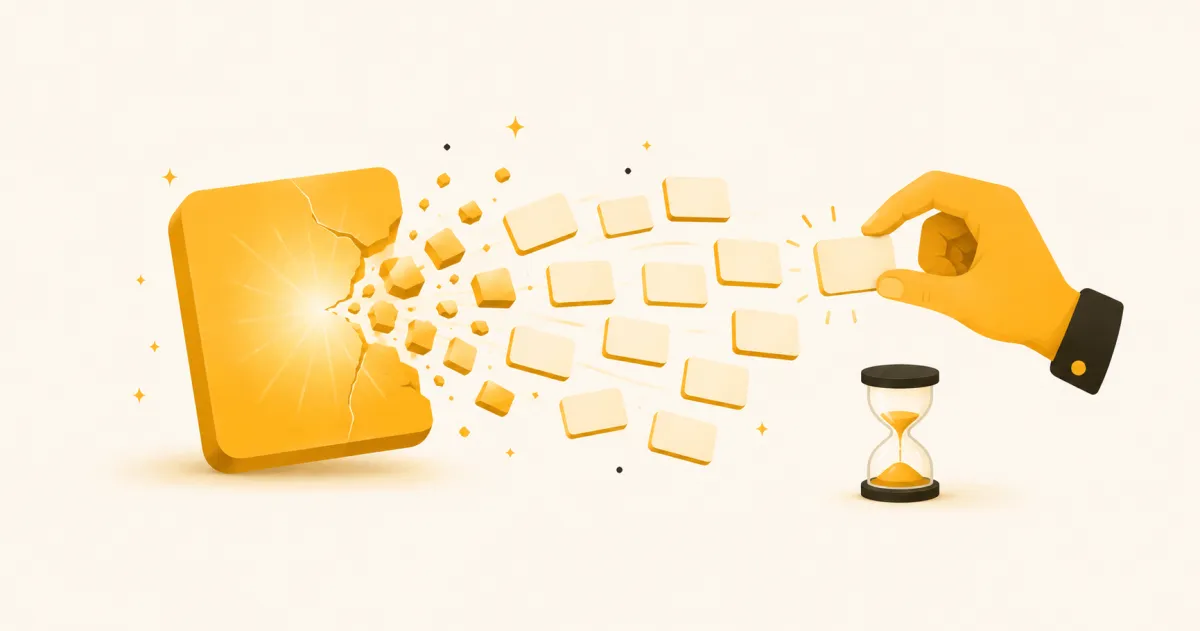
Microlearning is an approach to learning that delivers content in small, self-contained units. Each unit focuses on a single learning objective — one concept, one technique, one small skill — and can be completed in a few minutes.
Think of the difference between reading an entire chapter on Spanish grammar versus learning just how to conjugate one common verb today. Both teach you something. But the second is finished before your attention drifts, and you can practice it immediately.
A good microlearning unit usually shares a few traits:
- Focused: It covers one idea, not ten.
- Short: It fits in roughly 5 to 15 minutes.
- Self-contained: You get value even if you only do that one session.
- Actionable: It often ends with a quick task, question, or bit of practice.
Microlearning is not a new gimmick. It is really a modern name for something teachers and self-learners have always known: small, repeated doses of focused effort teach better than rare marathons.
Microlearning examples
Microlearning shows up in more places than you might expect. A few everyday examples:
- A five-minute language lesson that teaches ten new words and quizzes you on them.
- A short video that explains a single keyboard shortcut or spreadsheet formula.
- A daily coding challenge that drills one concept, like loops or arrays.
- A one-page summary of a business idea, followed by a single reflection question.
- A flashcard review session that takes three minutes on your phone.
Notice the pattern: each one is small enough to finish in a gap in your day, and each teaches one clear thing.
Why Short Sessions Beat Marathon Study Blocks
It feels productive to block out three hours and grind. But long study sessions have a hidden problem: most of that time is far less effective than the first stretch.
Here is why short, frequent sessions often win.
Attention fades fast. Focused attention is a limited resource. After roughly 20 to 30 minutes of concentrated effort, most people start to drift, re-read the same sentence, or quietly switch to their phone. A 15-minute session ends while you are still sharp.
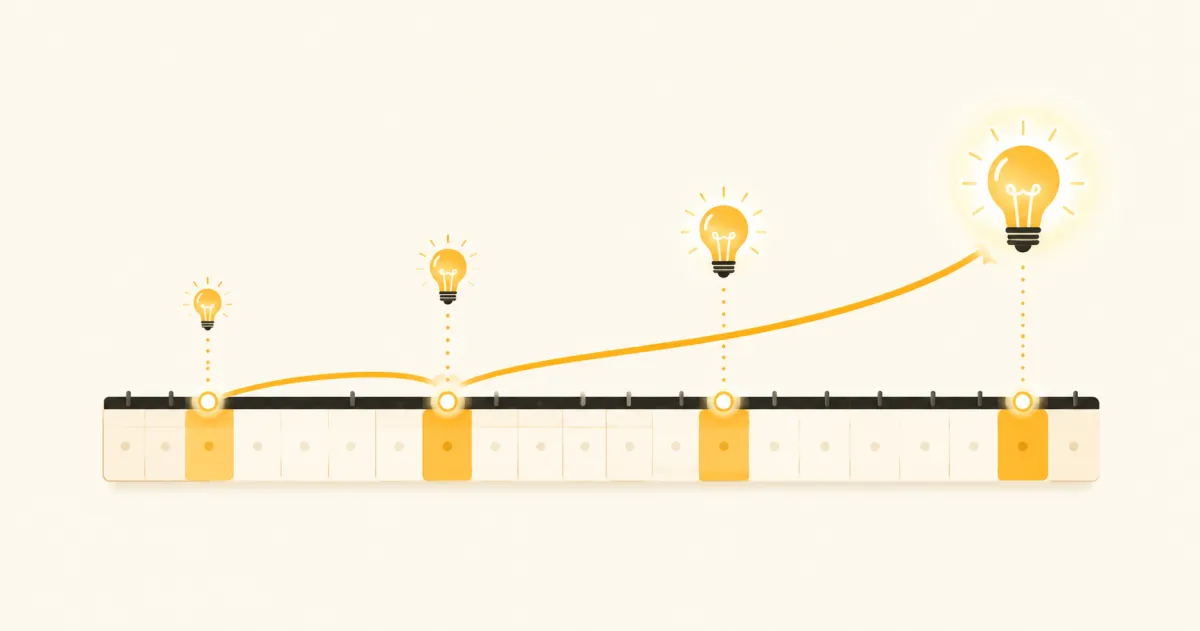
Frequency beats duration for memory. Learning something once for two hours is far weaker than learning it for 15 minutes across eight days. Spreading study out forces your brain to retrieve and rebuild the memory repeatedly, which is what makes it stick. Microlearning naturally spreads effort across many days.
Small sessions are easier to start. The hardest part of studying is beginning. “Study for three hours” is intimidating, so you procrastinate. “Study for ten minutes” is almost impossible to refuse. Lower friction means you actually show up — and showing up daily matters more than any single heroic session.
You lose less to interruptions. When a two-hour block gets interrupted, you lose momentum and have to rebuild focus. A ten-minute session is usually finished before an interruption even arrives.
The takeaway is not that long study is useless. It is that consistency and focus, which short sessions protect, drive more learning than raw hours logged.
The Science of Attention and Cognitive Load
To understand why microlearning works, it helps to know two ideas from learning science: attention limits and cognitive load.
Attention is finite and it decays. Your ability to concentrate deeply runs down like a battery. Research on sustained attention shows performance dropping the longer a task runs without a break. Short sessions keep you inside the high-focus window and end before fatigue sets in.
Working memory is small. Cognitive load theory describes how your working memory — the mental space where you actively juggle new information — can only hold a few things at once. When a lesson throws too much at you at the same time, your working memory overflows, and very little transfers into long-term memory.
Microlearning respects this limit. By covering one idea per session, it keeps the load manageable. You process a small chunk fully instead of half-absorbing a flood of material.
There is a second benefit. When learning is broken into pieces spread across days, you get natural gaps between sessions. Those gaps are not wasted — they are when your brain consolidates what you learned, quietly strengthening the memory. Pairing short sessions with spaced review turns this into a deliberate strategy, which you can read more about in our guide to spaced repetition.
How to Structure a Microlearning Routine
Knowing microlearning works is one thing. Building a routine you can keep is another. The goal is a repeatable system that removes decisions, so learning happens almost automatically.
Here is a simple structure that works for most busy learners.
The 15-Minute Daily Block
Start with one 15-minute block per day. Not three, not “whenever I have time.” One block, same time, every day.
To make it stick:
- Anchor it to something you already do. Attach your session to an existing habit — right after your morning coffee, on the train, or once the kids are in bed. The existing routine becomes the reminder.
- Pick the time your focus is best. If you are sharp in the morning, do not save learning for exhausted evenings.
- Set one clear objective per session. Decide before you start: “Today I learn X.” Ending with a defined win keeps sessions from wandering.
- Protect the block. Silence notifications and close other tabs. Fifteen focused minutes beats forty distracted ones.
- Stop when the timer ends. Ending on time keeps the habit light and repeatable. If you feel eager to continue, that is a good sign, not a reason to burn out.
Fifteen minutes a day is roughly 90 hours a year. That is enough to reach conversational ability in a language, learn the fundamentals of programming, or build a solid design skill — all from time you would otherwise lose.
Pairing Micro-Sessions With Spaced Review
Learning something once is not enough. To keep it, you need to revisit it — and this is where microlearning becomes powerful.
Reserve part of your daily block for reviewing older material, not just new content. A simple pattern:
- Spend the first few minutes reviewing something you learned a few days ago.
- Spend the rest learning one new thing.
This blend means every session both adds new knowledge and reinforces old knowledge before it fades. Over weeks, the review naturally spaces itself out: recent material comes up often, older material less so, exactly matching how memory works.
If planning that review schedule sounds like a chore, it can be. Deciding what to revisit and when is genuinely hard to do by hand, which is one reason many learners let a structured, personalized learning path handle the sequencing for them — surfacing the right review at the right moment so each short session lands where it counts.
Where Microlearning Falls Short
Microlearning is powerful, but it is not a universal answer. Using it well means knowing its limits.
It struggles with deep, connected topics. Some skills require holding many ideas in mind at once — writing a long proof, debugging a complex system, or drafting an argument. These need longer, uninterrupted “deep work” sessions that microlearning cannot fully replace.
Fragments can stay fragmented. If every session is a disconnected snippet, you can end up with a pile of facts that never form a coherent whole. Microlearning needs an underlying structure — a path that connects each small piece into a bigger picture.
It is easy to feel busy without progressing. Doing a quick lesson every day feels productive, but activity is not the same as learning. Without checkpoints that test whether material actually stuck, you can drift for weeks and mistake motion for mastery.
Some practice needs volume. Skills like playing an instrument or coding benefit from longer stretches of repetition. Short daily reps help, but occasional longer practice sessions still matter.
The fix for most of these limits is the same: combine short sessions with a clear structure and regular checkpoints. Microlearning is the delivery method; it works best inside a well-sequenced plan rather than on its own.
Building a Microlearning Plan Around Your Schedule
The best microlearning plan is the one that fits your real life, not an idealized version of it. Here is how to build one.
- Define your goal and the finish line. Vague goals (“get better at marketing”) produce vague effort. Pick something concrete: “understand the basics of email marketing in eight weeks.”
- Break the goal into small units. Split the goal into many single-concept lessons. Each should be completable in one short session. This is the core work of any good plan — and the hardest to do alone.
- Match the plan to your time budget. Be honest about how many minutes you truly have per day. A plan built for 15 minutes a day that you keep beats a 60-minute plan you abandon.
- Sequence it sensibly. Order lessons so each builds on the last. Foundations first, then the pieces that depend on them.
- Add review and checkpoints. Schedule revisits of earlier material and quick quizzes to confirm the learning stuck before you move on.
- Track your streak. Seeing an unbroken run of days is one of the strongest motivators there is. It turns “I should study” into “I do not want to break my streak.”
If assembling all of that by hand feels like more work than the learning itself, you are not wrong — sequencing, sizing, and scheduling a plan is a real job. A more detailed walkthrough of the timing side lives in our guide on how to create a learning schedule you actually stick to, and the habit side is covered in how to build a daily learning habit that sticks.
Frequently Asked Questions
What is microlearning in simple terms?
Microlearning is learning in short, focused bursts — usually 5 to 15 minutes — where each session covers one small idea or skill. Instead of long study marathons, you learn a little at a time, consistently, until the small pieces add up to real knowledge.
How long should a microlearning session be?
Most microlearning sessions run 5 to 15 minutes. That length is short enough to stay inside your peak-focus window and easy enough to start that you will actually do it daily. The exact number matters less than doing it consistently.
Is microlearning actually effective?
Yes, for most skills. Short, frequent sessions work with how attention and memory function: they avoid overloading your working memory, and spreading study across many days strengthens retention far more than a single long session. Microlearning is less suited to topics that require long, deeply connected focus.
What are examples of microlearning?
Common examples include a five-minute language lesson with a quick quiz, a short video explaining one spreadsheet formula, a daily coding challenge focused on one concept, a three-minute flashcard review, or a one-page summary followed by a single reflection question.
Is microlearning good for adults?
Microlearning is especially well suited to busy adults. Adults rarely have long, uninterrupted study blocks, but they do have small pockets of time throughout the day. Microlearning turns those pockets — a commute, a break, a few quiet minutes — into steady progress without disrupting work or family life.
Can microlearning replace traditional courses?
It can replace much of the passive lecture-watching in traditional courses, but not everything. Deeply connected skills still need occasional longer, focused sessions. The strongest approach uses microlearning for daily progress inside a structured plan that connects the small lessons and checks your understanding along the way.
Make Microlearning Your Default with Solohustller
The hardest part of microlearning is not the studying — it is the setup. Someone has to break your goal into single-concept lessons, size each one to the minutes you actually have, sequence them so they build on each other, and schedule review so nothing fades. Do that by hand and the planning can cost more effort than the learning.
Solohustller handles that part for you. You give it a goal, your current level, and how much time you can spare each day, and it builds a structured, personalized learning path made of short daily lessons sized to your schedule. Microlearning stops being something you assemble and becomes the built-in default.
Each lesson stays focused on one idea, ends with a quick quiz so recall — not just re-reading — locks the material in, and spaced review of earlier material surfaces automatically at the right time. Progress tracking and streaks give every short session a visible payoff, so showing up each day feels like momentum instead of willpower.
If you have small pockets of time and a big goal, that is exactly the situation microlearning is built for. Join the Solohustller waitlist and turn ten spare minutes a day into a skill you can actually use.