When choosing how to learn a new skill, you’ll face a fundamental decision: self-paced learning or structured courses? Each approach has passionate advocates and genuine benefits. The truth? Neither is universally better—but one is probably better for you.
Let’s break down both approaches so you can make an informed choice.
Understanding Self-Paced Learning
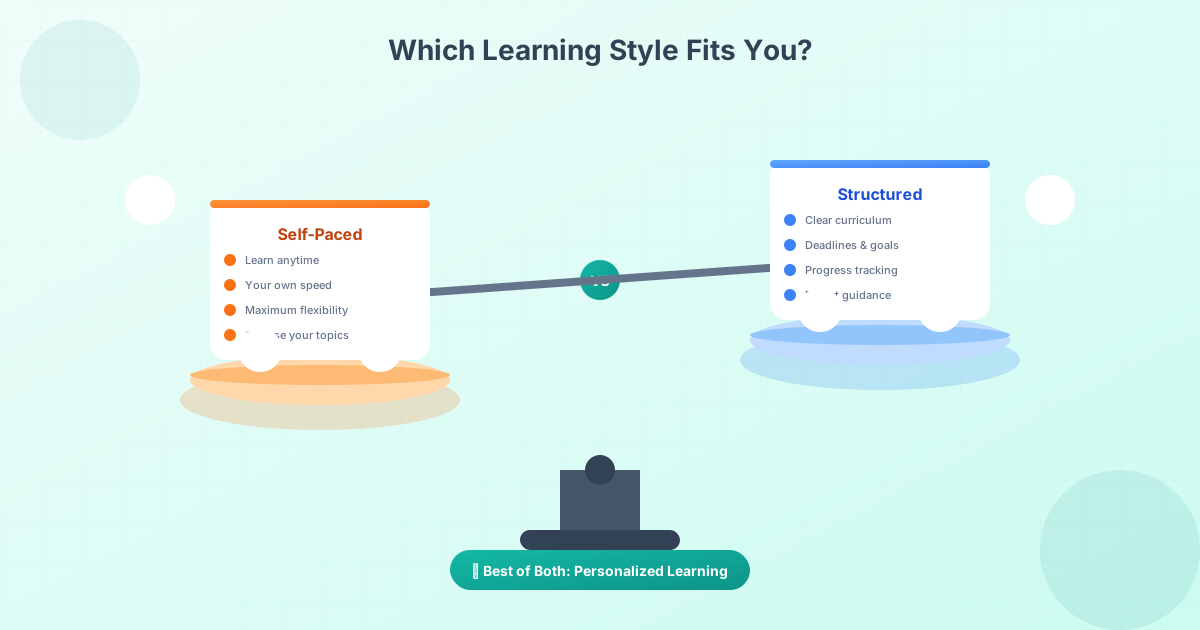
Self-paced learning puts you in control. You choose what to learn, when to learn it, and how fast to progress.
What Self-Paced Learning Looks Like
- Watching YouTube tutorials on your schedule
- Reading documentation and books independently
- Building projects through trial and error
- Taking online courses without deadlines
- Learning from blog posts and articles
Advantages of Self-Paced Learning
Complete Flexibility Learn at 6 AM or midnight. Speed through easy sections, slow down for challenging ones. No external schedule to accommodate.
Cost-Effective Many excellent resources are free—YouTube, documentation, open-source projects, free course tiers. You can learn entire skills without spending anything.
Depth Control Want to dive deep into a specific topic? Nothing stops you. Self-paced learning allows you to explore tangents and satisfy curiosity.
No Waiting Start immediately. No enrollment periods, no waiting for cohorts, no prerequisites to complete first.
Disadvantages of Self-Paced Learning
No External Accountability Without deadlines or expectations, it’s easy to deprioritize learning. “I’ll do it tomorrow” becomes “I’ll do it next week” becomes “I’ll start over next month.”
Knowledge Gaps Without a structured curriculum, you might miss fundamental concepts. You learn what interests you, not necessarily what you need.
Direction Uncertainty Am I learning the right things? Am I progressing appropriately? Self-paced learners often struggle with these questions.
Isolation Learning alone can feel lonely and demotivating. Without peers or instructors, you miss valuable feedback and community support.
Understanding Structured Courses
Structured courses provide a predefined curriculum with clear progression, deadlines, and often community interaction.
What Structured Learning Looks Like
- Bootcamps with fixed schedules
- University courses with syllabi
- Cohort-based online programs
- Corporate training with deadlines
- Certification programs with requirements
Advantages of Structured Courses
Clear Direction Someone experienced has organized the curriculum. You know what to learn, in what order, and can trust the path.
Built-In Accountability Deadlines and expectations create external pressure that keeps you moving. Missing a deadline has consequences.
Community and Support Peers provide motivation, collaboration opportunities, and emotional support. Instructors offer guidance and answer questions.
Recognized Credentials Completing structured programs often comes with certificates or credentials that employers recognize.
Disadvantages of Structured Courses
Rigid Scheduling The course happens when it happens. If you have a busy week, you fall behind. If you’re sick, you miss content.
One-Size-Fits-All Pace The course moves at its own speed. Too slow and you’re bored; too fast and you’re overwhelmed. Either way, it’s not your optimal pace.
Cost Quality structured programs often cost significant money—hundreds or thousands of dollars for bootcamps.
Commitment Required Starting a structured course means committing to a schedule for weeks or months. Life changes can make this commitment difficult to maintain.
The Hidden Third Option: Personalized Structure
Here’s what most discussions miss: self-paced and structured aren’t the only options. There’s a middle ground—personalized structure—that combines the best of both.
What Personalized Structure Offers
Customized Curriculum Like structured courses, you get an organized learning path. But unlike generic courses, the path is designed for your specific goals and starting point.
Flexible Scheduling Like self-paced learning, you control when you learn. But unlike pure self-pacing, you have a framework that keeps you accountable.
Adaptive Pacing The curriculum adjusts to your progress. Master something quickly? Move on. Struggling with a concept? Get more practice.
Goal Alignment Everything you learn connects directly to your objectives. No irrelevant content, no missing prerequisites.
Which Approach Suits You?
Consider these factors:
Choose Self-Paced If:
- You’re highly self-motivated and disciplined
- Your schedule is unpredictable
- You learn best through exploration
- Cost is a major constraint
- You have a clear understanding of what you need to learn
Choose Structured Courses If:
- You need external accountability
- You have a predictable schedule
- You’re entering a completely new field
- Credentials matter for your goals
- You thrive in community environments
Choose Personalized Structure If:
- You want direction without rigidity
- Your time is limited but consistent
- You have specific goals but aren’t sure of the path
- You value efficiency in learning
- You want accountability without the bootcamp price tag
Making Either Approach Work
Regardless of which approach you choose, certain principles make learning more effective:
For Self-Paced Learners
Create Your Own Structure Set personal deadlines. Create a curriculum outline. Without this, self-paced easily becomes no-paced.
Find Accountability Partners Tell someone your goals. Join a community. Create external expectations even without a formal course.
Regular Self-Assessment How do you know you’re progressing? Build in quizzes, projects, and checkpoints to evaluate your understanding.
Combat Scope Creep It’s easy to rabbit-hole into interesting tangents. Keep a list of topics to explore later, but stay focused on your core curriculum.
For Structured Course Students
Supplement When Needed If the course pace doesn’t match yours, find additional resources to fill gaps or satisfy curiosity.
Engage with Community Don’t just complete assignments—participate in discussions, form study groups, and build relationships.
Apply Beyond Assignments Course projects are a minimum. Build personal projects that extend what you’re learning to cement understanding.
Adapt Course Content to Your Goals A generic course can’t know your specific objectives. Mentally connect each lesson to your real-world applications.
The Hybrid Approach
Many successful learners combine approaches:
- Start with structure to build foundations and momentum
- Transition to self-paced for specialization and depth
- Return to structure for accountability during plateaus
- Use personalized tools to maintain direction without rigidity
This hybrid approach adapts to your evolving needs as a learner.
What the Research Says
Studies on learning effectiveness show:
- Personalized learning improves outcomes by 30-50% compared to one-size-fits-all approaches
- Accountability increases completion rates by 3x
- Flexibility reduces dropout rates, especially for working adults
- Clear goals improve retention and application of knowledge
The ideal approach combines personalization with accountability while maintaining flexibility—exactly what personalized structure offers.
Making Your Decision
Ask yourself:
- What’s my biggest learning challenge? Motivation? Direction? Time? Cost?
- What’s worked for me in the past? Build on successful patterns.
- What are my constraints? Budget, schedule, family, work?
- What are my goals? Credentials? Skills? Career change?
Your answers point toward the right approach. There’s no universal best—only what’s best for you.
The Bottom Line
Self-paced learning offers freedom but requires discipline. Structured courses provide direction but lack flexibility. Personalized structure aims to provide the best of both worlds.
The most important factor isn’t which approach you choose—it’s whether you commit to consistent progress. Any approach works if you work it.
Solohustller offers personalized learning paths that combine structured curriculum with flexible scheduling. Get the direction of a course with the flexibility of self-paced learning—customized to your goals, schedule, and experience level. Try it free.