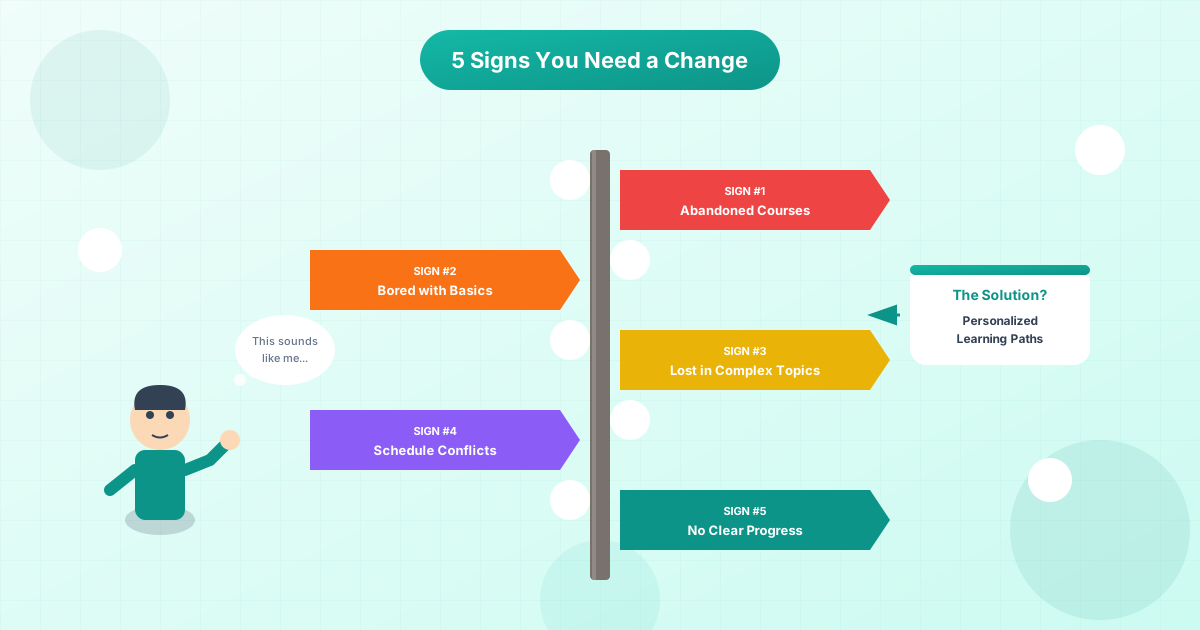
Not all learners struggle for the same reasons. Some lack motivation. Others have plenty of motivation but can’t seem to make progress despite their effort. If you fall into the second category, the problem might not be you—it might be your learning approach.
Here are five signs that indicate you need a personalized learning path instead of generic courses.
Sign 1: You Keep Starting Over
The Pattern: You start a course with enthusiasm. A few weeks in, you fall behind or lose interest. Rather than pushing through, you find a “better” course and start fresh. Months later, you’ve started five courses but finished none.
What’s Happening: Generic courses are designed for average learners, but no one is actually average. When a course doesn’t match your pace, background, or goals, it creates friction that builds until you abandon it.
What You Need: A learning path that starts where you are—not where the course designer assumes beginners are. One that moves at your pace, not a predetermined schedule.
Sign 2: You Feel Bored and Challenged Simultaneously
The Pattern: Parts of your learning feel too easy—you already know this stuff. Other parts feel impossibly hard—you’re missing assumed knowledge. You’re never in the sweet spot of appropriate challenge.
What’s Happening: Standardized curricula can’t account for your unique background. Maybe you know JavaScript but not CSS. Maybe you understand theory but lack practical experience. Generic courses can’t adapt to these nuances.
What You Need: A curriculum that assesses what you know, identifies gaps, and focuses your time on actual growth areas. Not review of familiar material or assumptions about prerequisites you don’t have.
Sign 3: Your Learning Feels Disconnected from Your Goals
The Pattern: You’re working through a course, but you can’t see how it connects to what you actually want to do. You learn features you’ll never use while missing skills you need.
What’s Happening: Generic courses teach broad skills to broad audiences. They can’t know that you want to build mobile apps, not enterprise systems. Or that you need data visualization, not machine learning.
What You Need: A goal-first approach that starts with what you want to achieve and works backward to determine what you need to learn. Every lesson should connect to your objective.
Sign 4: You Struggle to Maintain Consistent Progress
The Pattern: You make progress in bursts, then stall. You’ll have a productive week followed by two weeks of nothing. Your learning graph looks like a heartbeat monitor, not a steady climb.
What’s Happening: When a course doesn’t adapt to your life, disruptions become derailments. Miss a cohort deadline? You’re behind. Have a busy week? The course marches on without you.
What You Need: Flexible scheduling that works with your life, not against it. A system that adjusts when you miss days instead of making you feel like a failure.
Sign 5: You Can’t Track Your Real Progress
The Pattern: You’re not sure if you’re actually improving. You complete lessons and assignments, but you can’t point to tangible skills you’ve gained. Progress feels abstract and uncertain.
What’s Happening: Generic courses measure completion, not competence. Watching all the videos isn’t the same as mastering the material. Without personalized assessment, you can’t know where you truly stand.
What You Need: Regular, meaningful assessments that identify your actual strengths and gaps. Progress tracking based on demonstrated ability, not just content consumed.
Why These Signs Matter
If you recognize yourself in two or more of these signs, generic courses are fighting against you, not helping you. You’re not lacking discipline or intelligence—you’re using tools poorly suited to your needs.
The Cost of the Wrong Approach
Wasted Time: Learning content you already know or that’s irrelevant to your goals wastes hours you could spend on meaningful growth.
Wasted Money: Paying for courses you don’t complete or that don’t deliver relevant skills drains resources better spent elsewhere.
Wasted Motivation: Every abandoned course chips away at your confidence. You start to believe you’re “not a good learner” when really you just need a different approach.
Delayed Goals: Most importantly, the wrong learning approach delays achieving whatever brought you to learning in the first place—career change, new skills, personal growth.
What Personalized Learning Looks Like
A truly personalized learning path addresses each of these signs:
Instead of Starting Over…
You get a curriculum that begins at your actual starting point, determined by assessment rather than assumption.
Instead of Boredom/Overwhelm…
Content adapts to your demonstrated knowledge. You skip what you know and get support where you struggle.
Instead of Disconnection…
Your learning goal drives the curriculum. Every lesson connects to what you want to achieve.
Instead of Inconsistent Progress…
The schedule adapts to your availability. Miss a day? The system adjusts. Have extra time? You can move ahead.
Instead of Uncertain Progress…
Regular assessments show exactly where you are—your strengths, your gaps, and your growth over time.
Making the Shift
If these signs resonate, here’s how to move toward personalized learning:
Step 1: Define Your Specific Goal
Not “learn programming” but “build a portfolio website to showcase my design work.” Not “learn data science” but “analyze customer behavior for my marketing role.”
Specific goals enable specific curricula.
Step 2: Audit Your Current Knowledge
Be honest about what you already know and where you have gaps. This self-awareness helps any learning approach, but it’s essential for personalized learning.
Step 3: Find Adaptive Tools
Look for learning platforms that:
- Assess before teaching
- Adapt to your progress
- Allow flexible scheduling
- Track meaningful outcomes
Step 4: Commit to the Approach
Personalized learning isn’t magic—it still requires effort. But that effort produces better results because it’s focused on your actual growth areas.
The Bottom Line
Generic courses work for some people. But if you’re struggling despite genuine effort—if you recognize yourself in these five signs—the problem isn’t you.
You don’t need more discipline. You need a different approach.
Personalized learning paths address the root causes of learning struggles:
- Wrong starting point → Assessment-based beginning
- Wrong pace → Adaptive progression
- Wrong content → Goal-aligned curriculum
- Wrong schedule → Flexible timing
- Wrong metrics → Competency-based tracking
When learning is designed around you instead of around assumptions, progress stops being a struggle and starts being a process.
Ready for a learning path that adapts to you? Solohustller creates personalized curricula based on your goals, schedule, and existing knowledge. No more starting over, no more disconnected content—just focused progress toward your objectives. Generate your custom learning path free in under 60 seconds.