You have the skills. Now prove it.
That is the gap between thousands of self-taught learners and the jobs they deserve. You have spent months learning data analysis, web development, or digital marketing. You can do the work. But hiring managers see no degree, no big-name employer, and no reason to take a chance.
A skills portfolio changes that. According to a 2025 HackerRank report, 72% of hiring managers say a strong portfolio influences their decision more than a resume. This guide shows you how to build one from scratch, whether you are a career changer, self-taught developer, or someone building high-income skills without a degree.
Why a Skills Portfolio Matters More Than a Resume
The NACE 2026 hiring outlook found that 70% of employers now use skills-based assessments in their hiring process. Companies like Google, Apple, and IBM have removed degree requirements from hundreds of roles.
A resume lists what you claim to know. A portfolio proves it. It shows your problem-solving process, the quality of your work, and your growth trajectory, things a one-page document simply cannot capture.
What is a skills portfolio? A curated collection of your best work, projects, certifications, and documented learning that demonstrates your capabilities. Unlike a resume that lists credentials, a portfolio shows evidence of what you can actually do.
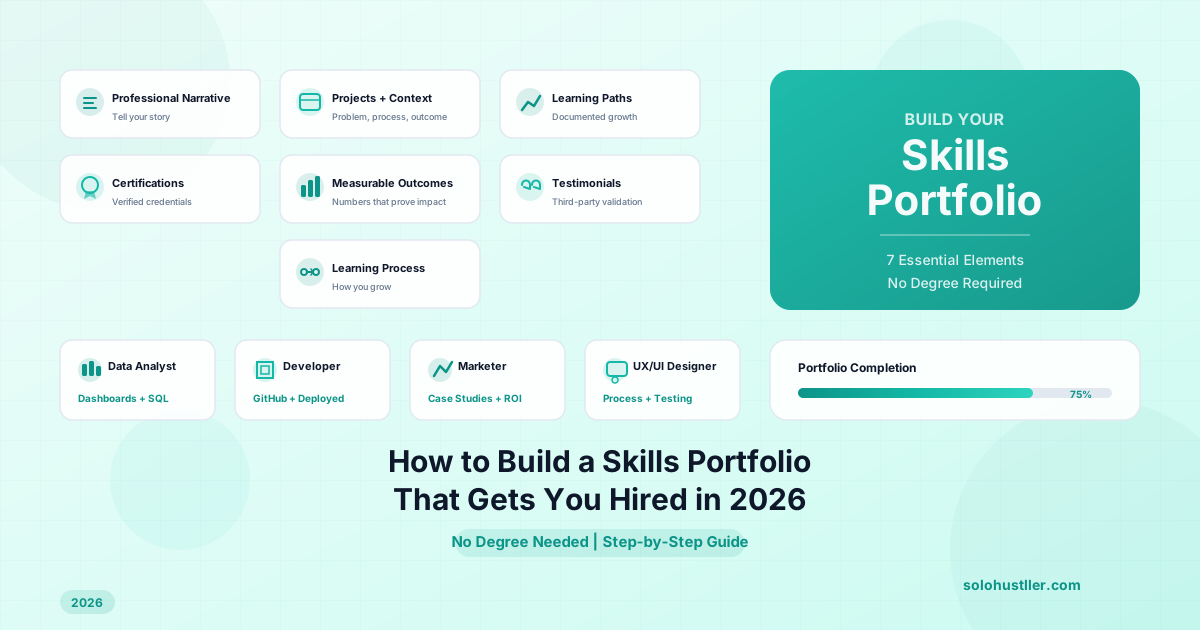
The 7 Essential Elements of a Skills Portfolio
1. A Clear Professional Narrative
Tell your story in under 150 words: where you started, what you build now, and where you are heading. A data analyst who started because they wanted to help nonprofits is more memorable than one who lists “proficient in SQL and Tableau.”
2. Completed Projects with Context
Every project needs three layers:
- The problem: What were you solving and why did it matter?
- The process: What approach did you take?
- The outcome: What was the result?
A developer who explains they reduced checkout abandonment by 31% through UX research is far more compelling than one who just shows a finished website.
3. Documented Learning Paths
Show that you learn systematically, not randomly. Document the resources you used, how you structured your study, and how you tracked progress. Platforms like Solohustller make this easy by generating personalized learning paths that track your milestones, streaks, and quiz scores automatically.
4. Certifications and Micro-Credentials
Include certifications that are industry-recognized (AWS, Google, HubSpot), relevant to your target role, and earned within the last 2-3 years. They add credibility alongside demonstrated work.
5. Measurable Outcomes
Numbers beat adjectives. Quantify your impact:
- “Reduced page load time by 40%”
- “Grew organic traffic from 2,000 to 8,500 monthly visitors in 4 months”
- “Designed a checkout flow that increased conversions from 2.1% to 3.4%“
6. Testimonials and Social Proof
Client quotes from freelance work, peer endorsements, mentor recommendations, or community recognition all add credibility your own words cannot.
7. Your Learning Process
Show how you learn, not just what you learned. Examples of how you debug problems, research solutions, and iterate based on feedback prove you can handle anything on the job.
What should a skills portfolio include? Seven elements: a professional narrative, 3-5 projects with context, documented learning paths, relevant certifications, measurable outcomes, social proof, and evidence of your learning process.
How to Build Your Portfolio Step by Step
Step 1: Audit your skills. Compare your abilities against 10-15 job listings for roles you want. The gaps become learning priorities. A personalized learning path on Solohustller can identify gaps through adaptive quizzes and build a curriculum around closing them.
Step 2: Choose 3-5 projects. You do not need twenty projects. Pick ones that solve real problems, show different skills, and have clear outcomes. If you lack projects, create them using public datasets or small freelance work.
Step 3: Document as you learn. Start from day one, not after you finish. Keep a log of what you studied, problems you solved, and insights gained. A consistent learning schedule makes this habit easier.
Step 4: Build your showcase. Developers can use GitHub Pages or Vercel. Designers can use Behance or a custom site. Data analysts can combine GitHub repos with a summary site. Ensure it is mobile-friendly and fast-loading.
Step 5: Get feedback. Share with peers, people outside your field, and hiring managers if possible. Ask specific questions and iterate.
Step 6: Keep it alive. Review monthly. Add new projects, remove outdated work, and refresh your narrative. A portfolio showing consistent growth over 12 months impresses more than a burst of activity followed by silence.
Portfolio Examples by Career Path
Data Analysts: 3-4 analysis projects with different datasets, SQL examples, interactive dashboards, and write-ups explaining methodology and findings.
Self-Taught Developers: 3-5 deployed projects users can interact with, clean GitHub repos with tests, at least one full-stack project, and open-source contributions. See our complete programming roadmap for a structured approach.
Digital Marketers: 2-3 campaign case studies with metrics (traffic, conversions, ROI), content samples across formats, and analytics showing growth you drove.
UX/UI Designers: 3-4 detailed case studies showing the full design process from research through wireframes, iterations, final designs with rationale, and usability testing results.
5 Mistakes That Kill Self-Taught Portfolios
-
Including everything instead of curating. Four excellent projects beat fifteen mediocre ones. Hiring managers spend 30-60 seconds on initial review.
-
Showing tools, not thinking. “Built with React and Node.js” is less valuable than explaining why you chose that stack and what trade-offs you considered.
-
No context or impact. Frame every project as: “I noticed [problem], built [solution], which resulted in [outcome].”
-
Outdated projects. Keep at least two projects from the past 12 months. Stale portfolios signal stale skills.
-
No evidence of continuous learning. Show ongoing growth through recent certifications, a learning log, or a structured learning path. Solohustller tracks your continued learning with streaks and milestones, giving you tangible proof of development.
Using Your Portfolio in the Job Search
Put your portfolio URL at the top of your resume and in LinkedIn’s Featured section. In interviews, walk through 2-3 projects in detail, covering the problem, process, and outcome. For freelance proposals, link relevant projects tailored to the client’s needs.
Do you need a portfolio to get hired? While not every job requires one, 72% of hiring managers say portfolios influence their decisions more than resumes. For self-taught professionals and career changers, a skills portfolio is often the difference between getting an interview and getting filtered out.
Frequently Asked Questions
How many projects should a skills portfolio include?
3-5 high-quality projects is ideal. Each should serve a purpose: one shows technical depth, another shows breadth, a third demonstrates business impact. Quality always beats quantity.
Can I build a portfolio while still learning?
Absolutely. Start with smaller projects and replace them as your skills grow. Your learning process itself is a portfolio piece, especially when tracked through Solohustller’s progress milestones and quiz scores.
What if I have no professional experience?
You do not need it. Use public datasets for data projects, redesign existing products for design work, or build tools solving your own problems. Frame everything around a real problem and measurable outcome.
How often should I update my portfolio?
At least monthly. During an active job search, update weekly. Add new projects, remove outdated ones, and keep your narrative current.
Start Building Your Portfolio Today
The biggest barrier to a great portfolio is not talent. It is structure. Solohustller gives you a personalized learning path designed around your goals, tracks your progress with streaks and milestones, and provides certificates that add credibility to your portfolio.
Your portfolio tells employers what you can do. Your learning path shows them how you got there.
Join the waitlist and start building the skills and portfolio that get you hired.